Why Resilience Is Becoming a Requirement
Critical infrastructure has to work. Not only under ideal conditions, but especially when power grids, IT systems or supply chains come under pressure. This is exactly where the KRITIS Act comes in. It makes clear that security of supply is no longer just a technical issue. It is a strategic responsibility for operators, management teams and security officers.
Whether energy supply, healthcare, water, transport, public administration or telecommunications: when critical systems fail, the consequences for society, the economy and public safety can be severe. The German Federal Office for Information Security continues to define KRITIS operators as regulated entities with obligations regarding registration, reporting of significant security incidents and the implementation of appropriate protective measures.
With NIS2 and the KRITIS Umbrella Act, the perspective becomes even broader. While NIS2 primarily addresses cybersecurity as well as network and information security, the KRITIS Umbrella Act strengthens the physical resilience of critical facilities. This includes risk analyses, protection concepts, emergency management and reporting obligations. The German Bundestag has adopted legislation to strengthen critical facilities and better protect operators against sabotage, attacks and other threats.
Why UPS and Uninterruptible Power Supply Play a Central Role in the KRITIS Environment
UPS stands for Uninterruptible Power Supply. In German, the term USV is commonly used. A UPS bridges power outages or grid disturbances and protects sensitive systems from failure. In critical infrastructure, this is particularly important because even short interruptions can lead to data loss, system errors, operational downtime or security risks.
A conventional UPS solution is often designed for a few minutes or hours. It ensures that servers, control systems, communication equipment or medical devices do not shut down abruptly. In many cases, this time is sufficient to safely shut down systems or start an emergency power generator.
But the new reality requires more. KRITIS operators must not only secure individual systems, but also make entire operational processes more resilient. It is no longer only about short term bridging. It is about operational sites that remain functional, mobile readiness, resilient charging infrastructure and energy availability even when the public grid is not available as planned.
KRITIS Resilience Requires More Than a Traditional Backup Power Solution
The KRITIS Act changes the perspective. Operators must identify risks, assess them and derive suitable measures. A power outage is only one possible scenario. Other risks include cyberattacks, physical sabotage, extreme weather events, technical failures, bottlenecks in grid connections or prolonged supply disruptions.
This is why energy availability is becoming a core element of modern security concepts. A UPS protects important systems at the moment of failure. Mobile and off grid energy supply can significantly expand operational flexibility beyond that. It can be used wherever power is needed at short notice, where no grid connection is available or where charging infrastructure must remain available despite grid limitations.
This is especially relevant for operators that depend on electric vehicles, emergency fleets, service vehicles or mobile work processes. If vehicles cannot be charged, it is not just mobility that may come to a standstill. The response capability of an entire organization can also be affected.
ME Energy as a Building Block for Off Grid Charging Infrastructure
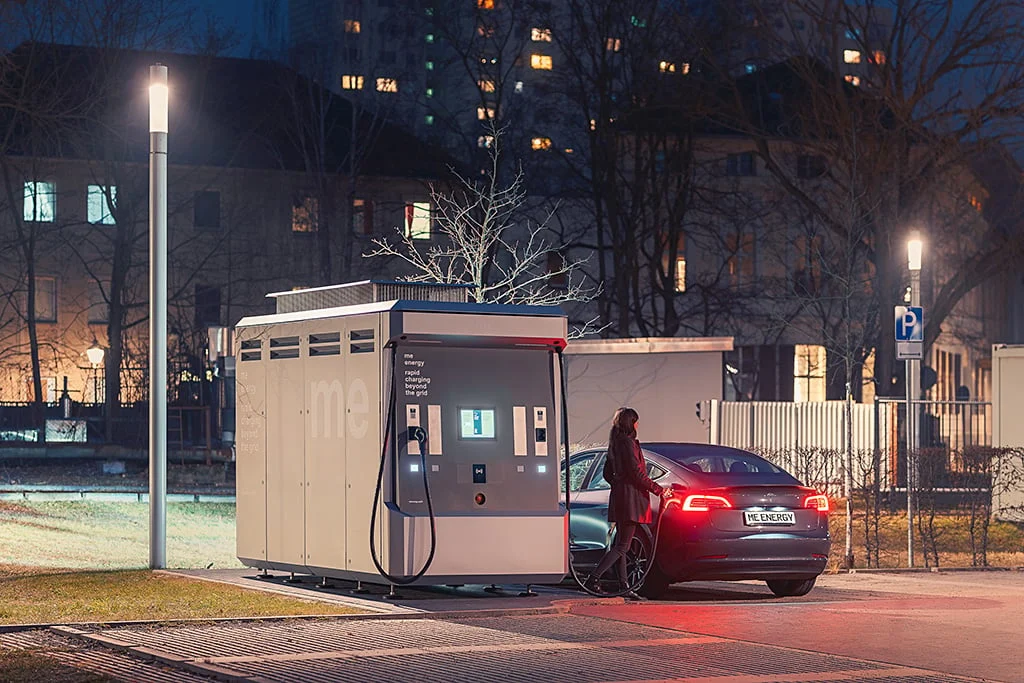
With the Rapid Charger 150, ME Energy offers a mobile fast charging station that can be operated independently of the power grid. According to the company, the Rapid Charger 150 enables off grid fast charging at any location and can be purchased, rented or leased flexibly.
For KRITIS operators, this approach is interesting because charging infrastructure often fails due to long planning periods, grid connection requirements, construction work and limited connection capacities. A mobile and off grid fast charging station can be a practical addition here. It does not replace a complete KRITIS strategy and it does not replace a conventional UPS for sensitive IT systems. However, it can become an important component of a resilient energy and mobility concept.
This becomes particularly relevant for temporary sites, construction sites, emergency operations, fallback locations, depots, municipal services, security providers, energy suppliers or organizations with electrified fleets. When charging points need to be available quickly, a mobile solution can make a real difference.
UPS, Backup Power and Mobile Fast Charging Must Be Considered Together
In many companies, UPS, backup power and charging infrastructure are still viewed separately. IT plans the UPS. Facility management plans emergency power. Fleet management plans charging points. Management deals with compliance and risk management. In a KRITIS environment, this separation is becoming less and less sufficient.
A resilient organization needs an integrated concept. Critical IT systems require uninterruptible power supply. Operationally relevant facilities require reliable backup or emergency power solutions. Electric fleets require charging capability even during grid bottlenecks or temporary outages. This is exactly where the connection between the KRITIS Act, UPS and mobile energy supply becomes clear.
A strong resilience concept does not only answer the question of what happens during a power outage. It also answers how long operations can continue, which vehicles remain ready for deployment, which locations are prioritized and which energy sources are available at short notice.
Why Companies Should Act Now
The KRITIS Umbrella Act has been in force since March 2026, while further details and regulations are still being developed. Reports indicate that specific legal ordinances and reporting processes are still being finalized in some areas, but operators should nevertheless begin preparing early.
Waiting is not a good strategy in this area. Resilience is not created on paper. It is created through planning, technical implementation, testing and clear responsibilities. Those who only start when deadlines are close lose valuable time. Energy supply, charging infrastructure and emergency operations in particular require preparation.
For operators of critical infrastructure and companies with security relevant responsibilities, this means that their energy architecture needs to be reviewed. Are existing UPS systems sufficient? Is there backup power for operationally relevant processes? Are electric fleets still deployable during grid problems? Are mobile reserves available? Are fallback locations prepared? Are responsibilities and reporting channels clearly defined?
Mobile Energy Supply as a Competitive Advantage
Even beyond legal obligations, there is a clear advantage. Companies that can provide energy flexibly remain operational. Companies that can deploy charging infrastructure without a lengthy grid connection process move faster. Companies that can charge electric fleets independently of location reduce operational risk.
ME Energy positions the Rapid Charger 150 exactly in this field: mobile fast charging, independent of the power grid, flexible in use and designed for corporate fleets. On its website, the company emphasizes that the solution is intended for companies that want to charge their fleets independently of the grid and sustainably.
This fits a market in which security of supply, sustainability and speed are increasingly connected. Electromobility alone is not enough. It must also be reliably available. Especially in a KRITIS environment, charging infrastructure must not become a weak point.
Conclusion: KRITIS Security Starts With Energy Availability
The KRITIS Act makes it clear that resilience is no longer an optional add on. Operators must protect their critical processes, reduce risks and ensure their ability to act even in exceptional situations. UPS and uninterruptible power supply remain essential, especially for IT, communication and control systems.
At the same time, modern resilience requires more than conventional bridging systems. Mobile, off grid energy supply and flexible fast charging infrastructure can become important building blocks for companies that want to make their sites, fleets and operational processes more robust.
For KRITIS operators, municipal companies, energy suppliers, logistics businesses and organizations with security relevant responsibilities, now is the right time to rethink energy supply. Not only when the grid fails. But before things become critical.