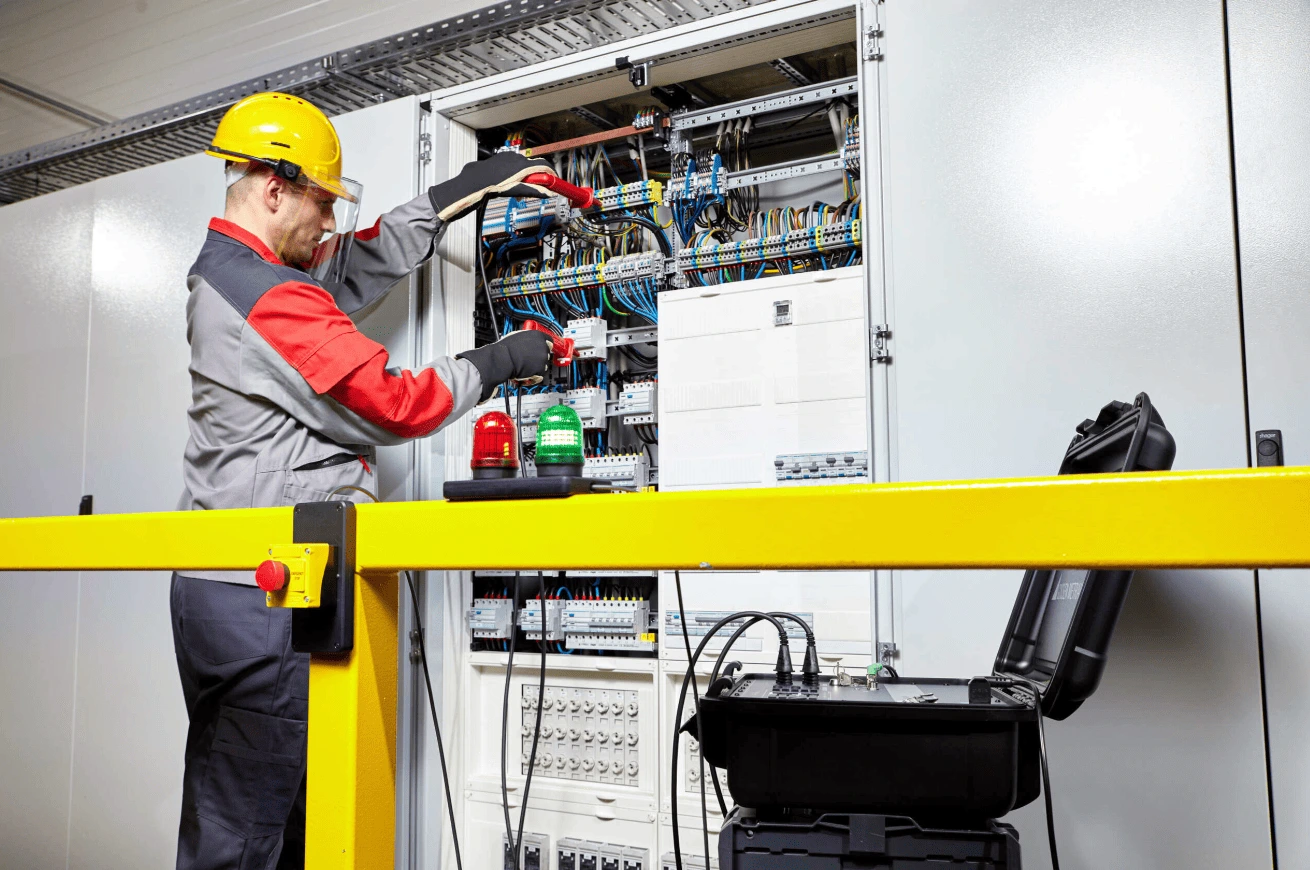
In industrial environments, measurement technology is often taken for granted. Devices are available, measurements are performed, and the displayed values are accepted without much reflection. This is exactly where the problem begins. Measurement errors rarely come from the devices themselves but rather from incorrect usage, lack of understanding, or unfavorable conditions. Especially in electrical testing, using equipment from brands such as Fluke, Gossen Metrawatt, Megger, or Metrel, these mistakes can have serious consequences. Incorrect measurements can lead to wrong diagnoses, unnecessary downtime, or even safety risks for both personnel and equipment.
Incorrect device settings as an underestimated source of error
One of the most common issues in practice is using the wrong device settings. In many cases, measurements are performed quickly without verifying whether the correct measurement type or range has been selected. It makes a significant difference whether alternating current or direct current is being measured, or whether the appropriate testing mode is active. Modern instruments offer a wide range of functions, which are not always used correctly. Without a clear understanding of the device, it is easy to obtain values that appear reasonable but are actually incorrect. Taking a brief moment to define the measurement objective and understanding the instrument’s functionality helps prevent this issue.
Environmental influences and interference are often ignored
Electrical measurements are rarely carried out under ideal laboratory conditions. Instead, they take place in production environments, outdoors, or under harsh conditions. Temperature, humidity, and electromagnetic interference all have a direct impact on measurement results. This is particularly critical for insulation testing or sensitive measurements, where even small variations can lead to significant deviations. Many users rely on the displayed value without considering these external factors, resulting in measurements that are technically performed but not truly reliable. Consistent and accurate results require awareness of environmental conditions and their influence.
Poor contact leads to distorted results
Another frequent issue occurs at the simplest point of the measurement process, the contact itself. Loose test probes, contaminated or oxidized surfaces, and improper connection points introduce additional resistance that distorts the measurement. This is especially relevant in resistance measurements or protective conductor testing, where even minor contact issues can significantly affect the outcome. In practice, this aspect is often overlooked because it seems trivial. However, it is precisely this detail that determines whether a measurement is valid or misleading. Careful and clean contact is essential for reliable results.
Lack of calibration causes gradual deviations
Even high-quality instruments only provide accurate results if they are regularly calibrated. In many companies, devices are used for years without systematic verification. The problem is that deviations develop gradually and often go unnoticed in daily operations. The measured values still appear plausible but lose accuracy over time. This becomes a serious issue during audits or when troubleshooting critical problems. A structured calibration process ensures long-term reliability and proper documentation of measurement accuracy.
Misinterpretation of measurement results
The most critical error does not occur during the measurement itself but during the evaluation of the results. A measurement value is only useful if it is correctly interpreted. In practice, there is often a lack of knowledge regarding limit values, standards, or the proper context for evaluation. Under time pressure, results are accepted without sufficient validation. This can lead to overlooked issues or incorrect conclusions. In electrical testing, interpretation is key, as many values only make sense when assessed within the framework of applicable standards and specific use cases.
Conclusion: measurement technology is only as good as its application
Electrical measurement technology is a fundamental element of safety, quality, and system reliability. Modern instruments are highly advanced and capable of delivering precise data. However, the true determining factor is not the device itself but the person using it and the process surrounding the measurement. Understanding and avoiding common errors creates the foundation for reliable results and significantly reduces operational risks. This is where the difference lies between basic usage and true professional expertise.