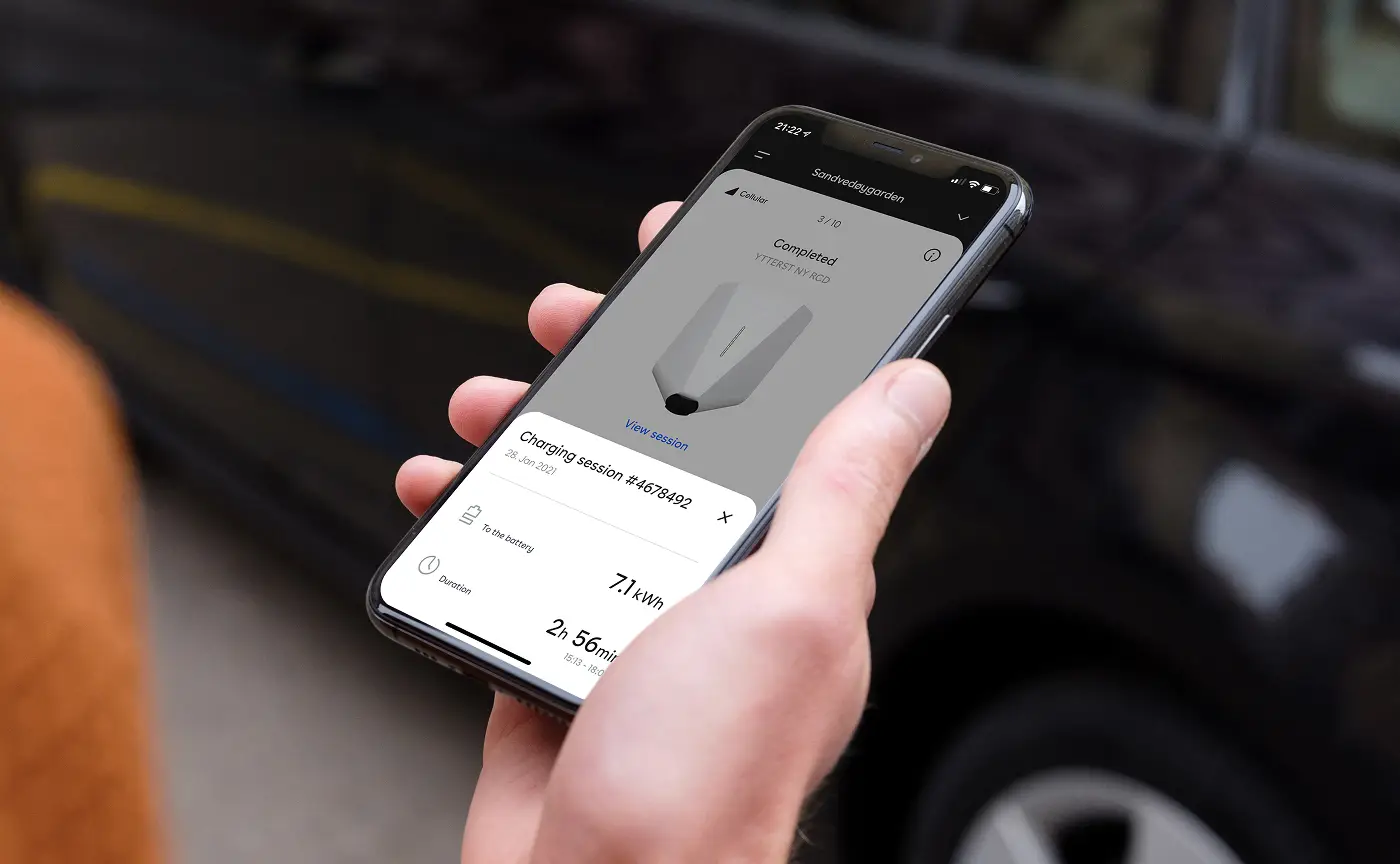
Smart charging stations are EV charging points that are controlled, monitored, and optimized via software. Unlike basic wallboxes, they communicate with the vehicle, the building, the energy source, and the cloud. The goal is safe, efficient, and cost-effective charging that adapts to available power, electricity prices, and user needs.
How smart charging works technically
Smart charging connects metering data, control logic, and connectivity. Meter readings and grid load are continuously recorded, and the system calculates the optimal charging power. Using standardized protocols such as OCPP, the station exchanges data with backend systems and energy management platforms. In combination with ISO 15118, the vehicle can provide additional data, enabling future features like Plug & Charge. This entire chain allows charging sessions to be scheduled, prioritized, and adjusted in real time.
Dynamic load management in buildings
A key benefit of smart charging stations is dynamic load management. The available grid capacity at a site is continuously monitored. When building consumption increases, charging power is reduced; when consumption drops, it increases again. Multiple charging points can be distributed fairly, preventing overloads and avoiding expensive peak demand charges. This improves operational reliability without requiring oversized grid connections.
Using solar power and increasing self-consumption
In combination with photovoltaic systems, smart charging can use surplus solar energy for charging. The station considers current generation and household consumption, adjusting charging power so that as much solar energy as possible flows into the vehicle. This reduces energy costs and improves the CO₂ footprint of each kilometer driven. If needed, users can switch between pure PV surplus charging and faster charging using grid electricity.
Price- and time-optimized charging
Smart charging stations can take tariffs and time windows into account. With dynamic electricity pricing, charging is prioritized when energy costs are lower. For company fleets or multi-family buildings, schedules can be defined based on availability, departure times, and priorities. This creates a charging strategy that minimizes costs while ensuring mobility.
Transparency, billing, and user convenience
Smart charging makes charging sessions fully transparent. Users can view real-time charging power, energy consumption, and costs via an app. In commercial environments, users can be authenticated and charging sessions assigned to individuals or vehicles. This enables compliant billing—for example, for company cars charged at home or public charging points on business premises. Features such as automatic authentication further simplify the charging experience.
Grid stability and future readiness
Smart charging stations contribute to a stable energy system. Controlled charging times and limited peak loads help reduce strain on the distribution grid. In the future, standards will enable bidirectional charging and grid services, allowing vehicles to both consume and supply energy. Investing in smart charging ensures long-term compatibility and supports future expansion.
Security and data protection
Secure communication, regular software updates, and role-based access control are essential. Modern systems rely on encrypted connections and separated user profiles. Clear protocols for error handling and centralized management of settings enhance reliability and data protection during operation.
Benefits for private users and businesses
Private users benefit from lower electricity costs, better use of solar energy, and greater control over their charging infrastructure. Businesses gain predictable energy costs, scalable charging infrastructure for multiple vehicles, and compliant billing systems. Properties also become more attractive, as charging points can be operated reliably without costly grid upgrades.
Conclusion
Smart charging stations make electric mobility more efficient, convenient, and future-proof. Through connected control, dynamic load management, and integration of renewable energy, charging becomes more cost-effective, transparent, and grid-friendly. Investing in smart charging today lays the foundation for scalable infrastructure and prepares for future developments such as advanced tariffs, automated authentication, and bidirectional charging.