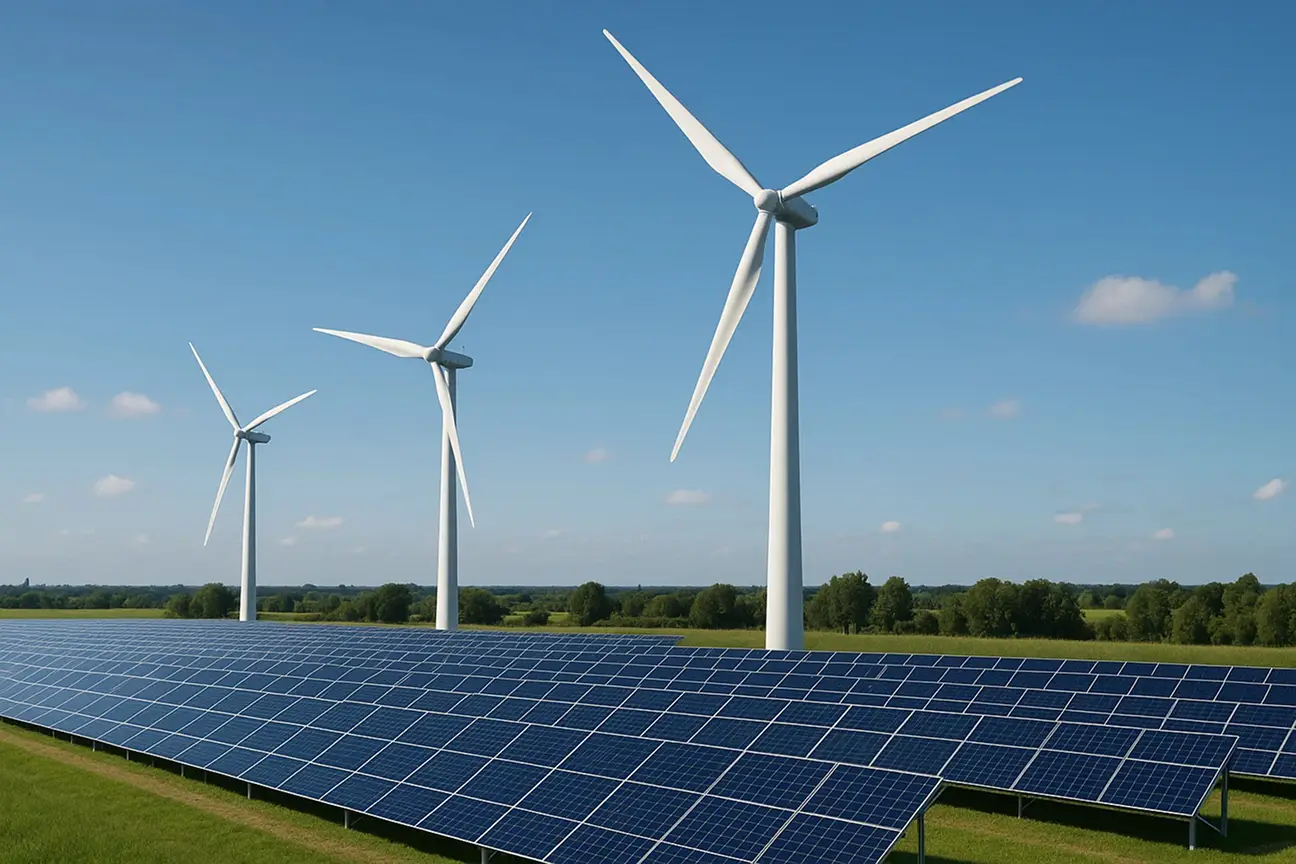
Anyone who charges their electric vehicle with green electricity—ideally generated by their own photovoltaic system and supported by a storage unit—drives more climate-friendly, reduces ongoing costs, and becomes more independent from the grid. Intelligent control systems, dynamic tariffs, and subsidy-eligible hardware transform a private garage, company parking lot, or public location into a true eco charging station.
Why green electricity and electric vehicles are a perfect match
The cleaner the electricity mix, the better the overall environmental performance of an electric vehicle. When charging energy comes from your own photovoltaic system, the CO₂ footprint is significantly reduced and the cost per kilometer decreases. In addition, a residential or commercial battery storage system increases energy independence by buffering solar peaks and shifting energy into the evening hours. For businesses, there is an added advantage: a visibly green charging infrastructure strengthens the brand, sustainability reporting, and employer attractiveness.
What makes an eco charging station stand out
An eco charging station is more than just a wallbox. It is a coordinated system of energy generation, storage, and intelligent control. In a private setting, it combines PV modules, battery storage, and a wallbox into a unified system that directs as much self-generated electricity as possible straight into the vehicle. In a commercial environment, load management expands multiple charging points into an efficient charging park that protects grid connections and ensures predictable operation. Public locations rely on certified green electricity or their own renewable energy generation to provide high charging capacities in a climate-friendly way.
The three pillars of green charging infrastructure
Generation provides the green foundation. Photovoltaic systems on rooftops or carports feed electricity directly into the vehicle battery during the day. If no on-site system is available, certified green electricity ensures a clean carbon footprint.
Storage adds flexibility to the system. Residential batteries shift solar energy into the evening hours, while commercial storage systems smooth peak loads and reduce grid fees. Backup power functions also increase supply security.
Intelligent control connects everything into a smart ecosystem. PV surplus charging prioritizes self-generated energy, schedules and dynamic tariffs shift charging to cost-efficient time windows, and load management distributes available power across multiple vehicles. Open protocols such as OCPP ensure future-proof monitoring, billing, and scalability.
How to plan successfully
The process begins with a clear needs analysis. Driving profiles, typical parking durations, and charging windows determine the required capacity and number of charging points. A site assessment evaluates roof space, orientation, shading, grid connection, and parking conditions.
Based on this, the system components are defined. For residential buildings and employee parking, AC charging with 11 to 22 kW is usually sufficient. For high customer turnover or logistics applications, DC fast charging is recommended.
The size of the PV system can be estimated pragmatically based on annual mileage and vehicle consumption. Battery capacity depends on the desired level of energy independence and the share of evening and night charging. A suitable backend system with app or RFID, cost allocation, and optional roaming ensures operational transparency.
The next step covers installation, registration, and funding. A certified electrician verifies grid compatibility, implements scalable infrastructure, and ensures safety measures such as residual current protection and DC fault detection. Regulatory requirements, parking space labeling, and regional funding programs should be considered early.
After commissioning, continuous monitoring optimizes energy generation, charging behavior, and grid consumption. Firmware updates maintain system security, while seasonal adjustments further improve efficiency.
Keeping an eye on cost efficiency
Savings primarily result from cost-effective self-consumption of solar energy, reducing reliance on grid electricity. In commercial environments, additional savings come from reduced grid fees through peak load management.
Each kilowatt-hour of self-used energy increases the return on investment of the PV system, while a growing fleet distributes fixed infrastructure costs across more charging sessions. Planning ahead with conduits, spare capacity in distribution boards, and modular hardware enables easy future expansion.
Taking a holistic approach to sustainability
An eco charging station is one element of a broader sustainability strategy. Beyond the energy source, material selection and recyclability of hardware also play a role. Regional green energy contracts or power purchase agreements increase planning reliability.
Companies benefit from transparently reporting CO₂ savings and charging metrics within their ESG reporting.
Frequently asked questions
PV surplus charging also works in winter, although at a lower level. Battery storage increases usability during this time, while certified green electricity complements the energy mix.
For most residential and employee parking scenarios, AC charging is sufficient. DC fast charging is ideal wherever vehicles need to be quickly ready for use again.
Battery storage is not mandatory but increases independence and can significantly reduce costs.
Future-proofing is achieved through open protocols, updatable hardware, and planning that allows for easy expansion.
Conclusion and next step
The combination of PV generation, storage, and intelligent charging transforms any charging point into an eco charging station.
Those who plan strategically, scale efficiently, and rely on open standards will benefit from more sustainable, cost-effective, and reliable charging.